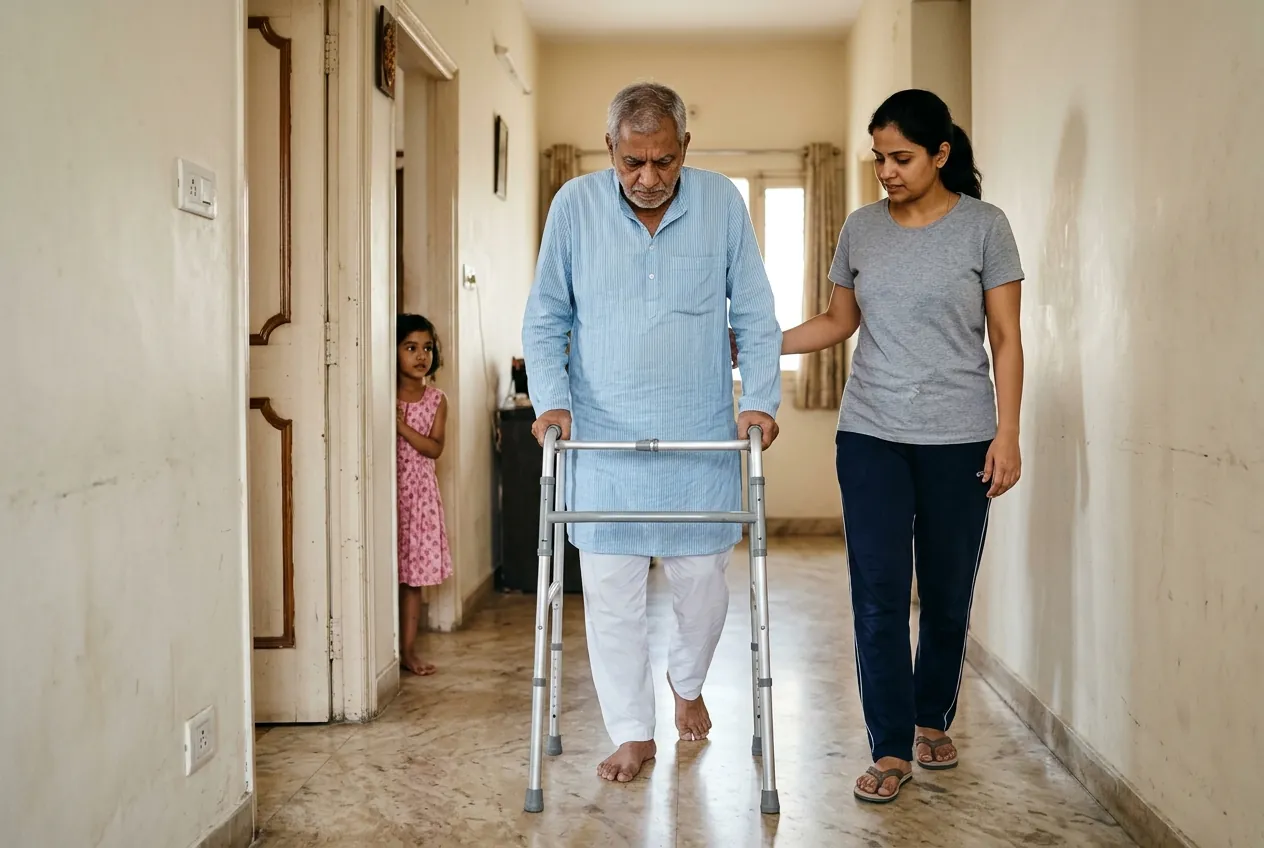
"From ICU to walking in eleven weeks. Daily neuro-physio, weekly reviews, and updates twice a day across three time zones. We watched him climb back, step by measured step."
Daughter, NCR
IllustrativeWe use the cookies this site needs. With your permission we also use Google Analytics to count visits anonymously. No advertising or tracking cookies. Change this any time from the footer. Read our Privacy Policy.
Structured physiotherapy, occupational, speech and neuro rehabilitation — coordinated under one Recovery Manager, at home or in a residence. A named milestone timeline for your recovery. Not scattered sessions. A route back to the life they want.
Progress you can see
Every recovery gets a named milestone timeline, not vague reassurance. Tap a milestone to see what that stretch of the climb looks like — and how we know it's working.
Foundations — safe movement first
We start where the body is, not where we wish it were. Pain-controlled basics: safe transfers, gentle range of motion, breathing — building toward your first named milestone, independent sitting balance. Small, deliberate, real.
What the climb is built from
Ortho, cardiac, geriatric and post-op physio — by therapists certified for each focus.
Daily-living skills, fine motor work, cognitive rebuilding — quietly transformative.
After stroke, neuro events or surgery — speech, language and swallowing care.
Structured, neuroplasticity-based programs for stroke, brain injury and Parkinson's.

Your progress is measured against named milestones set for your specific recovery — not vague reassurance — shared with you and your doctor, and used to adjust the plan. So the climb is honest, and the gains are real.
Illustrative examples, not real quotes
The quotes below are illustrative — composed from common patterns in family conversations. Verified case stories will be published with consent as our families opt in.
"From ICU to walking in eleven weeks. Daily neuro-physio, weekly reviews, and updates twice a day across three time zones. We watched him climb back, step by measured step."
Daughter, NCR
Illustrative"Six weeks of structured physio, mobility tracked daily, a calm transition home. No chaos — just progress you could actually see on a chart."
Son, Bengaluru
Illustrative"It's not a cure, we know. But dad is steadier, more confident, more himself. The plan gave us something we'd lost: momentum."
Daughter, Chennai
IllustrativeQuestions families ask first
Not necessarily. Send us your discharge summary and we'll build a plan with you — and align it with your treating doctor for sign-off.
A calm first conversation — no obligation. Send us the discharge summary and we'll map the route back.
Discuss your care needs
Tell us what support you need. The team will review suitability, availability and costs with you before you decide.
A coordinated need — not a single service
Tell us the situation and we coordinate everything it needs — the difference between a directory and a healthcare system.
You tell us the situation, in your words.
We make sense of the whole situation — not one box.
We match the right people — identity- and background-checked.
Care happens — and we track that it did.
It doesn't stop at one visit.
There's a record of what happened you can trust.
What we'll understand about your situation
Why families trust this
What a coordinated rehabilitation journey looks like
Part of one care network